
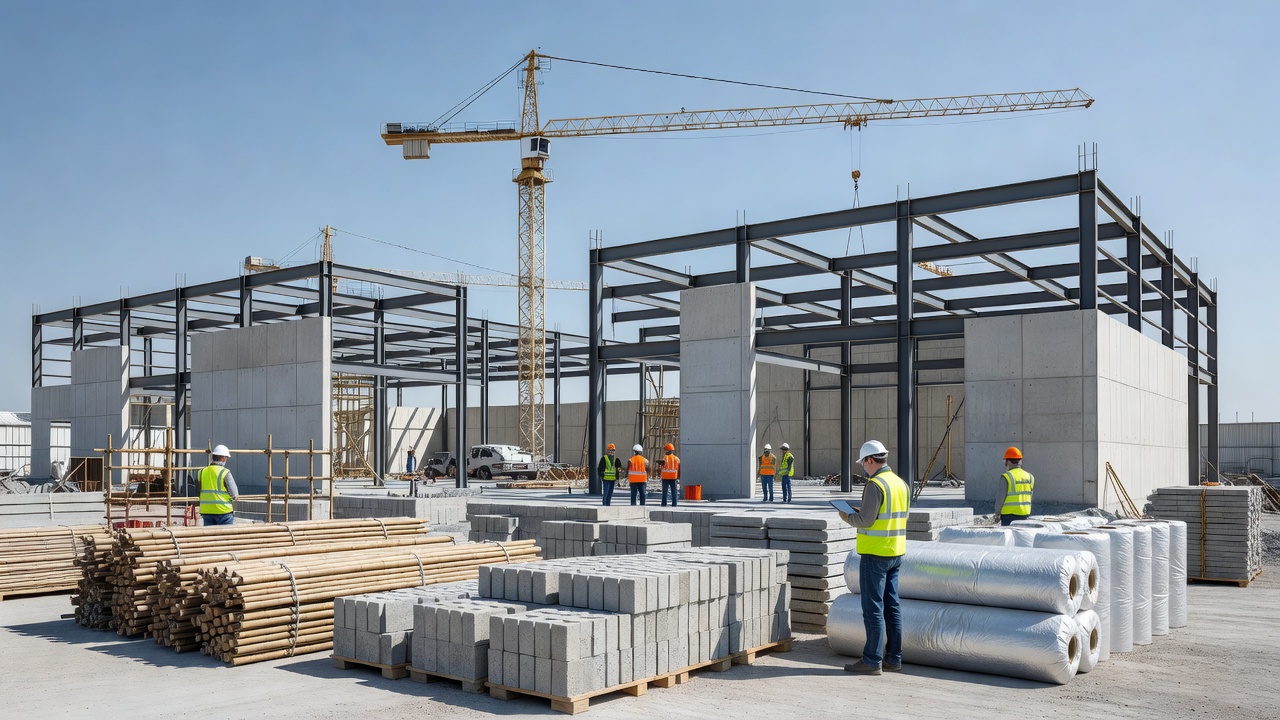
How to Reduce Carbon Footprint in Construction Projects
Imagine a future where every new industrial facility contributes positively to our planet, not just its economy. Industrial construction significantly impacts the environment, with a substantial portion of global emissions stemming from building activities. As project directors and facility managers, understanding how to reduce carbon footprint construction is no longer optional; it is a critical imperative for long-term sustainability and corporate responsibility. This article explores actionable strategies and best practices to minimize environmental impact from project inception to completion.
Detailed Guide to Sustainable Construction Practices
Achieving a lower environmental impact in construction begins with a holistic approach. It involves meticulous plaing and material selection, focusing on both operational carbon (energy consumed during a building’s use) and embodied carbon building materials (emissions from material extraction, manufacturing, transport, and construction). Early design phases offer the most significant opportunities to implement sustainable choices. Conducting a thorough lifecycle assessment building helps identify high-impact areas, guiding decisions on material sourcing, waste reduction, and energy-efficient systems. For instance, optimizing structural designs can reduce material quantities, while specifying low-carbon concrete or recycled steel directly lowers embodied emissions. Embracing modular construction techniques can also significantly reduce carbon footprint construction by minimizing on-site waste and improving resource efficiency.
Practical Tips for Greener Projects
Implementing sustainable practices across your project lifecycle is crucial to reduce carbon footprint construction.
- Optimize Site Logistics: Plan efficient transport routes for materials and persoel to minimize fuel consumption and emissions.
- Prioritize Renewable Energy: Integrate on-site renewable energy sources like solar panels for temporary power during construction and for the operational phase.
- Source Local Materials: Reduce transportation emissions by selecting materials produced within close proximity to the construction site.
- Implement Robust Waste Management: Develop comprehensive plans for material reuse, recycling, and responsible disposal to divert waste from landfills.
- Embrace Digital Tools: Utilize Building Information Modeling (BIM) and other digital platforms to optimize designs, reduce material waste, and enhance project efficiency.
Sustainable Material Choices vs. Traditional
| Aspect | Traditional Approach | Sustainable Alternative |
|---|---|---|
| Concrete | High Portland cement content | Low-carbon concrete (e.g., fly ash, slag) |
| Steel | Virgin steel production | Recycled content steel, optimized designs |
| Insulation | Petroleum-based foams | Natural fibers (e.g., cellulose, mineral wool) |
| Timber | Unsourced timber | FSC-certified timber, engineered wood products |
Frequently Asked Questions
What is “carboeutral construction”?
Carboeutral construction refers to projects where the net carbon emissions over the building’s lifecycle are zero. This is achieved by minimizing emissions at every stage and offsetting any remaining unavoidable emissions through verified carbon credits or renewable energy generation.
How does design impact a project’s carbon footprint?
Design decisions are paramount. Efficient layouts, passive solar design, natural ventilation, and optimized structural elements can significantly reduce material use and operational energy consumption, thereby lowering the overall carbon footprint before construction even begins.
Can reducing carbon footprint also offer economic benefits?
Absolutely. While initial investments may be required, strategies like energy-efficient systems, waste reduction, and durable material selection often lead to lower operational costs, reduced maintenance, and increased asset value over the building’s lifespan. These long-term savings provide a compelling business case for sustainable practices.
Building a Greener Tomorrow
Committing to a lower carbon footprint in construction is a strategic investment in our collective future. By integrating sustainable practices, from material selection to operational efficiency, industrial projects can set new benchmarks for environmental responsibility. At Trimulia, we are dedicated to partnering with clients to deliver high-performance, sustainable facilities. Discover how Trimulia can help achieve your environmental goals while building for tomorrow. Visit trimuliabp.com/design-build-contractor/ to learn more.