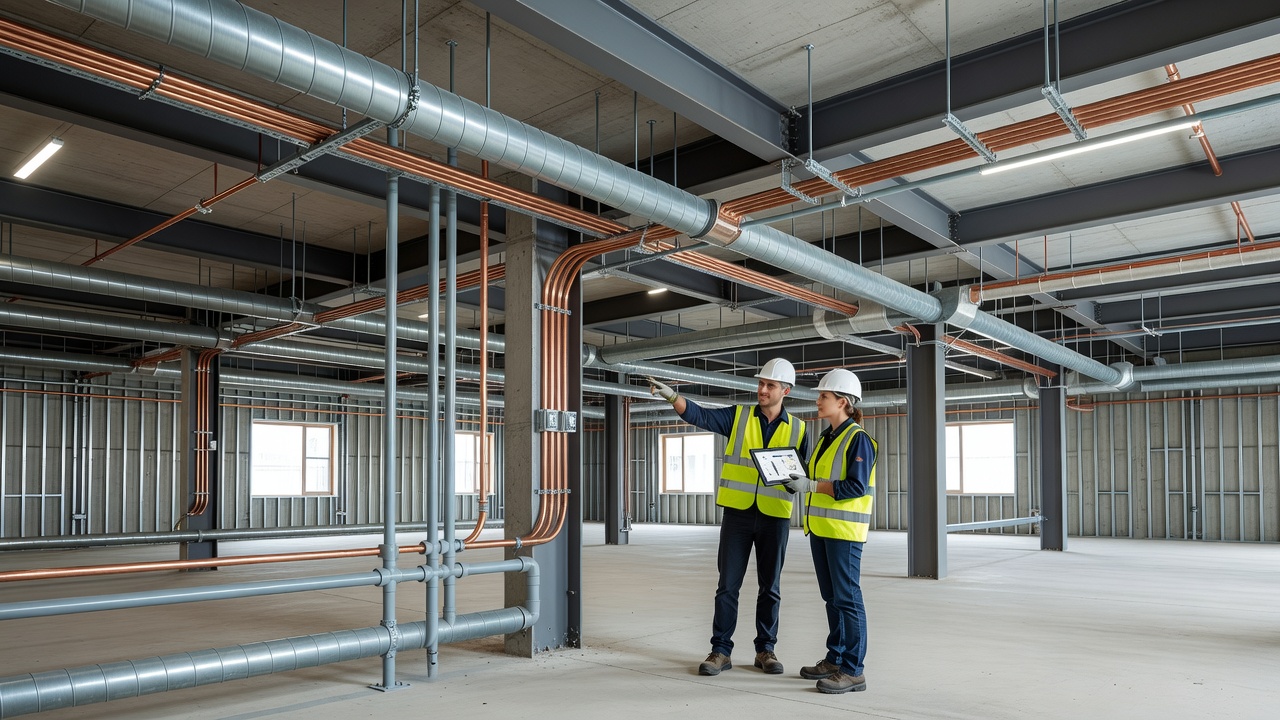
Optimizing Industrial Projects: The Power of MEP Coordination in Design-Build
Imagine constructing a complex industrial facility where every pipe, wire, and duct fits perfectly on the first attempt, without costly rework or schedule delays. This ideal scenario is increasingly achievable, particularly through effective MEP coordination design-build. In the intricate world of industrial construction, the mechanical, electrical, and plumbing (MEP) systems form the very nervous system of a building. Their seamless integration is not merely a preference; it is a critical requirement for operational efficiency, safety, and long-term performance. For facility managers, project directors, and investors, understanding the advantages of an integrated approach to MEP systems within a design-build framework is paramount for project success and mitigating risks.
A Detailed Guide to Integrated MEP Design in Design-Build
The design-build delivery method inherently fosters collaboration from a project’s inception. Unlike traditional approaches where design and construction are separate phases, design-build brings architects, engineers, and contractors together under one roof. This unified structure is particularly beneficial for MEP coordination design-build. From the earliest conceptual stages, MEP engineers can work directly with the design team and construction specialists, identifying potential conflicts and optimizing system layouts before ground is even broken. This proactive engagement is the cornerstone of an integrated MEP design process. It allows for comprehensive system plaing, ensuring all components are spatially compatible and functionally coherent.
One of the most powerful tools in this integrated approach is Building Information Modeling (BIM). BIM facilitates sophisticated MEP clash detection BIM, creating a virtual 3D model of the project where all disciplines can overlay their designs. This visual representation quickly highlights interferences between mechanical, electrical, and plumbing elements, allowing teams to resolve issues virtually rather than on the construction site. This early problem-solving significantly reduces costly field changes, improves constructability, and ensures a more predictable project timeline. The result is a highly efficient and well-coordinated mechanical electrical coordination that lays a robust foundation for the entire facility.
Practical Tips for Superior MEP Coordination
- Early Engagement: Bring MEP engineers and specialists into the design conversation from day one. Their insights are invaluable during initial plaing.
- Leverage BIM Technology: Implement comprehensive BIM for 3D modeling and regular clash detection meetings. This visual tool is essential for identifying and resolving conflicts proactively.
- Clear Communication Protocols: Establish defined chaels and regular meetings for all stakeholders to discuss progress, challenges, and solutions related to mechanical electrical coordination.
- Designated Coordinator: Appoint a dedicated MEP coordinator to oversee the integration process, ensuring all disciplines are working towards a common, clash-free model.
- Phased Review Cycles: Conduct iterative reviews of MEP designs at various project milestones, allowing for adjustments and refinements before construction begins.
Comparing Approaches to MEP Coordination
| Feature | Traditional Design-Bid-Build | Design-Build (with strong MEP Coordination) |
|---|---|---|
| Collaboration | Sequential, limited interaction | Integrated, continuous teamwork |
| Issue Resolution | Often reactive, during construction | Proactive, during design phase via MEP clash detection BIM |
| Project Timeline | Prone to delays from field changes | Streamlined, fewer construction phase disruptions |
| Accountability | Fragmented responsibility | Single point of responsibility for design and construction |
Frequently Asked Questions About MEP Coordination
Why is MEP coordination more effective in design-build projects?
In a design-build framework, the unified team means MEP engineers, architects, and constructors collaborate from the project’s very begiing. This early and continuous interaction allows for proactive identification and resolution of potential conflicts, leading to an optimized and integrated MEP system. This contrasts sharply with traditional methods where design and construction teams often work in silos, leading to conflicts discovered only during the build phase. The inherent collaborative nature of design-build greatly enhances MEP coordination design-build, ensuring a smoother execution.
What tools and technologies enhance mechanical electrical coordination?
Advanced technologies play a pivotal role in modern MEP coordination. Building Information Modeling (BIM) is perhaps the most significant, enabling 3D visualization and automated clash detection. Specialized software allows engineers to simulate system performance, optimize layouts, and identify interferences between different disciplines before any physical work begins. Laser scaing for existing conditions, virtual reality (VR) for design reviews, and cloud-based collaboration platforms further empower teams to achieve precise and efficient mechanical electrical coordination.
How does poor MEP coordination impact an industrial construction project?
Ineffective MEP coordination can lead to a cascade of negative consequences. These include significant cost overruns due to rework, delays in the project schedule as conflicts are resolved on-site, and compromised operational efficiency of the finished facility. Poor coordination can also result in safety hazards, accessibility issues for maintenance, and reduced system longevity. Ultimately, it can undermine the entire investment, highlighting why robust MEP coordination design-build is not just an advantage but a necessity for successful industrial projects.
Build with Precision: Your Partner for Integrated MEP Design
Effective MEP coordination is not merely a technical exercise; it is a strategic imperative for the success of any industrial construction project. By embracing the collaborative power of the design-build model and leveraging advanced tools like BIM, companies can transform complex MEP challenges into streamlined, efficient solutions. At Trimulia, our integrated approach ensures seamless MEP coordination design-build, delivering facilities that perform optimally from day one. We are committed to precision, predictability, and partnership, ensuring your next industrial project achieves its full potential. Partner with Trimulia for expert design-build services that prioritize integrated MEP excellence. Visit our design-build contractor page to learn more.