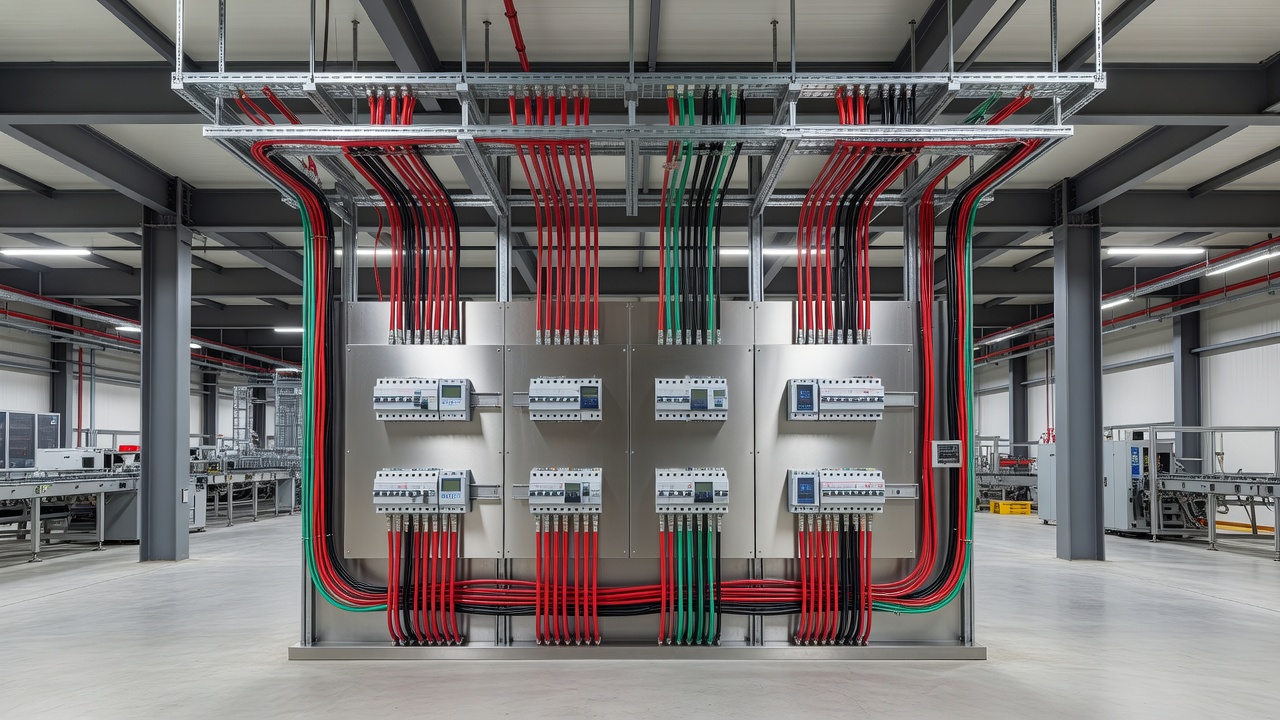
Optimizing Your Operations: The Crucial Role of Factory Electrical Power Distribution Design
Imagine a factory floor operating at peak efficiency, machines humming, production lines flowing seamlessly. What’s the unseen force enabling this consistent performance? It’s a meticulously designed factory electrical power distribution system. For any industrial facility, from manufacturing plants to processing units, the reliability, safety, and efficiency of its electrical infrastructure are paramount. A poorly plaed system can lead to costly downtime, safety hazards, and significant energy waste. Understanding the intricacies of this vital network is not just an engineering task; it is a strategic decision for sustained operational success.
A Detailed Guide to Robust Factory Electrical Power Distribution Systems
Designing an effective factory electrical power distribution system involves a comprehensive approach, starting from the point of entry to the individual load. It begins with the incoming utility supply, often at high voltage, which is then managed by a primary substation. Here, transformers reduce the voltage to levels suitable for industrial use, typically medium or low voltage, facilitating safe and efficient power delivery across the facility. Key components include main switchgear, which provides protection and control for the entire system, and busbar trunking or extensive cabling networks that distribute power to various sections.
Further down the line, robust industrial electrical panel design becomes critical. These panels house circuit breakers, fuses, and control devices, ensuring that power is safely and efficiently supplied to machinery, lighting, and other equipment. Motor Control Centers (MCCs) are specialized panels dedicated to starting, stopping, and protecting motors, which are ubiquitous in factory environments. Accurate electrical load calculation industrial is foundational at every stage, preventing overloading and ensuring future expansion capabilities. For large facilities, managing high voltage distribution factory infrastructure requires specialized expertise to ensure safety and compliance with international standards.
Practical Tips for Enhanced Power Distribution
Beyond the technical schematics, several practical considerations can significantly impact the long-term performance and safety of your electrical system.
- Plan for Future Expansion: Design with scalability in mind, anticipating potential increases in production capacity or additional machinery.
- Incorporate Redundancy: Implement backup power sources or parallel feeders for critical loads to minimize downtime during outages.
- Prioritize Energy Efficiency: Select high-efficiency transformers, motors, and lighting, and integrate power factor correction to reduce energy consumption.
- Adhere to Safety Standards: Ensure all designs comply with local and international electrical codes and safety regulations, including proper grounding and protection devices.
- Ensure Accessibility for Maintenance: Design layouts that allow for easy access to panels, switchgear, and cabling for routine inspections and repairs.
Comparing Distribution System Topologies
Choosing the right topology is fundamental to system reliability and operational flexibility. Here is a brief comparison of common configurations:
| Topology Type | Description | Reliability | Complexity | Maintenance |
|---|---|---|---|---|
| Radial System | Power flows from a single source to loads without alternative paths. | Moderate (single point of failure) | Low | Straightforward |
| Ring Main System | Power delivered via a closed loop, allowing supply from two directions. | High (resilient to single fault) | Moderate | More involved |
| Network System | Multiple feeders supply a common bus, offering highest reliability. | Very High (multiple supply paths) | High | Complex |
Frequently Asked Questions About Factory Electrical Systems
Why is accurate electrical load calculation industrial so important?
Accurate electrical load calculation industrial is crucial for several reasons. It ensures that all components, from transformers to cables and circuit breakers, are correctly sized to handle the maximum anticipated current without overheating or failure. This prevents costly equipment damage, reduces the risk of electrical fires, and optimizes energy efficiency by avoiding oversized components that operate inefficiently. It also provides a clear roadmap for future expansion, ensuring that the system can accommodate growth without requiring a complete overhaul.
What are the key considerations for industrial electrical panel design?
Effective industrial electrical panel design prioritizes safety, accessibility, and durability. Key considerations include selecting appropriate enclosure types to protect against dust, moisture, and hazardous environments; ensuring adequate ventilation to dissipate heat; providing clear labeling for circuits and components; incorporating robust protection devices like circuit breakers and surge suppressors; and designing for ease of maintenance and future modifications. Compliance with industry standards and regulations is non-negotiable for safe and reliable operation.
How do high voltage distribution factory systems impact overall efficiency?
High voltage distribution factory systems significantly impact overall efficiency by minimizing power losses over long distances. Transmitting electricity at higher voltages reduces current, which in turn reduces resistive losses (I²R losses) in cables. This means more power reaches the end-user equipment, resulting in lower energy bills and a more sustainable operation. Proper design of high voltage components, including substations and switchgear, ensures stable power delivery and enhances the overall reliability and performance of the entire factory electrical power distributioetwork.
Partnering for Power Excellence
A well-designed factory electrical power distribution system is more than just wires and panels; it is the backbone of your industrial operation’s productivity and safety. Entrusting its design and implementation to experts ensures reliability and future readiness. At Trimulia, we specialize in delivering comprehensive industrial construction solutions, including robust electrical infrastructure. Our commitment is to engineer systems that power your success, safely and efficiently. Partner with Trimulia for your next industrial project.
Discover how we can empower your operations: https://trimuliabp.com/design-build-contractor/